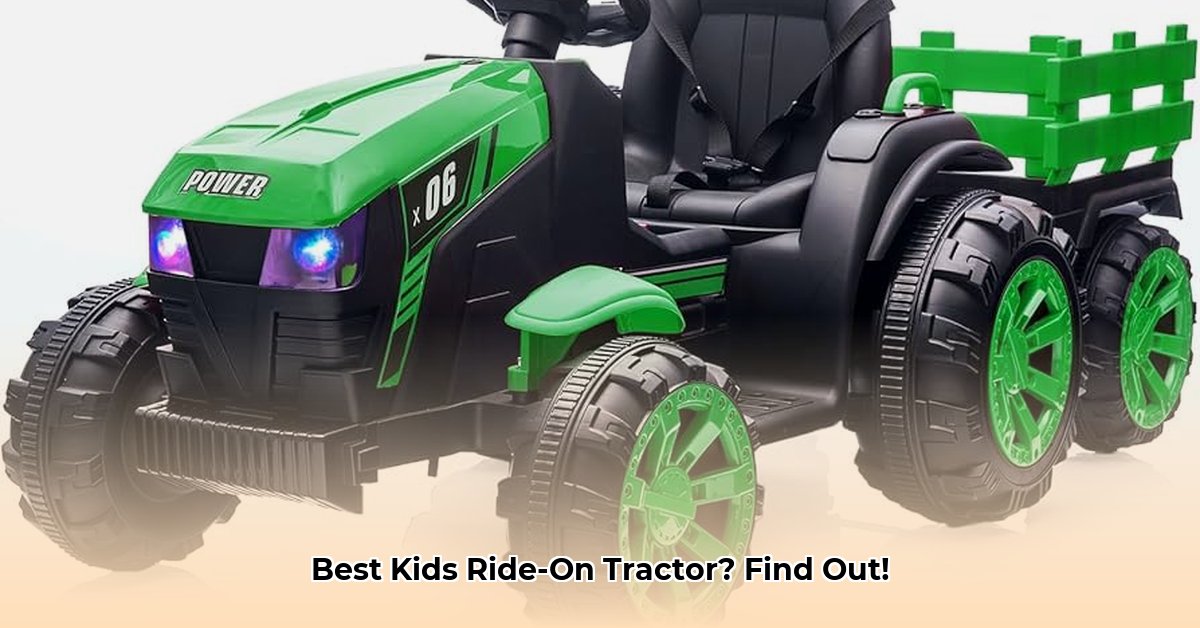
Choosing the Perfect Ride-On Tractor for Your Little Farmer
The squeals of delight, the determined grip on the steering wheel, the sheer joy of independent exploration – a ride-on tractor with trailer offers more than just playtime. It fosters imaginative play, encourages outdoor activity, and even subtly introduces concepts of engineering and transportation. But with so many models on the market, choosing the right one can feel overwhelming. This comprehensive guide will help you navigate the choices and find the perfect fit for your child, ensuring hours of safe and engaging fun. We’ll review top models, explore key features, and offer a straightforward buyer's guide to help you make the best decision for your family. For even more options, check out these John Deere RC Tractors.
Sizing Up the Competition: Top Kids Ride-On Tractor Models
To help you choose, we’ve reviewed three popular models, representing different price points and feature sets. Remember, the "best" tractor depends on your child's age, your budget, and your priorities.
Model A: The Powerhouse (Example: KidTough Tractor)
This model provides a premium experience, packed with features for older, more adventurous children.
- Features & Specifications: 24V motor (provides robust power), three forward speeds (allowing for varied play), detachable trailer (for hauling cargo), high weight capacity, meets ASTM and CPSIA safety standards (ensures safety compliance), and age range (typically 3-8 years, check manufacturer's specifications).
- Pros & Cons: Pros include its powerful motor, long battery life, durable construction, and extensive features. Cons include a higher price point and potentially being too large for younger children.
- Performance: User reviews praise the ride quality, durability, and powerful motor. However, some mention that assembly can be somewhat challenging.
Model B: The Budget-Friendly Option (Example: Little Farmer Tractor)
This entry-level model provides a fun introduction to the world of ride-on tractors without breaking the bank.
- Features & Specifications: Lower-powered motor (sufficient for younger children), simpler design (easier to use and maintain), smaller size, usually pedal-powered or lower-voltage battery, basic functionality, and simpler safety features – may or may not include a seatbelt depending on the model and design.
- Pros & Cons: Pros include its affordability and suitability for younger children. Cons include potentially shorter battery life (if battery-powered), less durable construction, and fewer features.
- Performance: Parents appreciate its simplicity and price, but some report shorter battery life and less robustness compared to higher-end models.
Model C: The Mid-Range Marvel (Example: Country Cruiser Tractor)
This model offers a sweet spot between features and price, delivering excellent value.
- Features & Specifications: Decent-powered motor (offers a good balance of speed and power), durable construction (built to withstand regular play), often includes a trailer, meets common safety standards (ASTM F963).
- Pros & Cons: Pros include its balance of features and affordability. Cons include possibly lacking the advanced features of premium models.
- Performance: User reviews generally report positive experiences with this model, highlighting its good value and durability.
Choosing the Right Ride-On Tractor: A Parent's Guide
Selecting the perfect ride-on tractor involves careful consideration of several factors. Follow these steps to make an informed decision:
1. Age Appropriateness: Always prioritize the manufacturer's recommended age range. This is crucial for safety and ensures the tractor is suitable for your child's developmental stage and size.
2. Safety First: Look for safety certifications like ASTM F963 and CPSIA. Ensure the tractor has a seatbelt (essential for toddlers and preschoolers). Consider features like speed limiters for added safety. Inspect the tractor for sharp edges or potential hazards.
3. Budget Considerations: Establish a budget before you start shopping to prevent overspending. Remember that higher-priced models often offer better durability and longer lifespan.
4. Feature Prioritization: Consider what your child will enjoy most. A detachable trailer adds to the fun, while a powerful motor allows for more challenging terrain. Prioritize features that will maximize your child's engagement and enjoyment.
5. Battery Life and Type: Longer battery life translates to more playtime. Consider the type of battery (lead-acid or other rechargeable options) and the cost and environmental implications of battery replacement.
Beyond the Basics: Enhancing the Play Experience
A ride-on tractor is more than just a toy; it's a catalyst for imagination, learning, and physical activity. Children develop spatial awareness, problem-solving skills, and creativity while playing. Adult supervision is crucial, especially with younger children. Teach your child safe driving habits and ensure a secure play area.
Recommendations
For Younger Children (Ages 2-4): Opt for a simpler, pedal-powered model or a low-voltage battery option with a speed limiter. The Little Farmer Tractor is a suitable choice in this category.
For Older Children (Ages 5-8): A more powerful model with a detachable trailer, like the KidTough Tractor, would be more appropriate.
For a Balance of Price and Features: The Country Cruiser Tractor offers a good middle ground, combining decent features with a reasonable price.
Remember that every child is different. Consider your child's personality, preferences, and developmental stage when making your final decision. We hope this guide has helped you navigate the choices and find the perfect ride-on tractor for your little one! Share your experiences in the comments below.